Ulrich Volp
A Selection of Current Research Projects
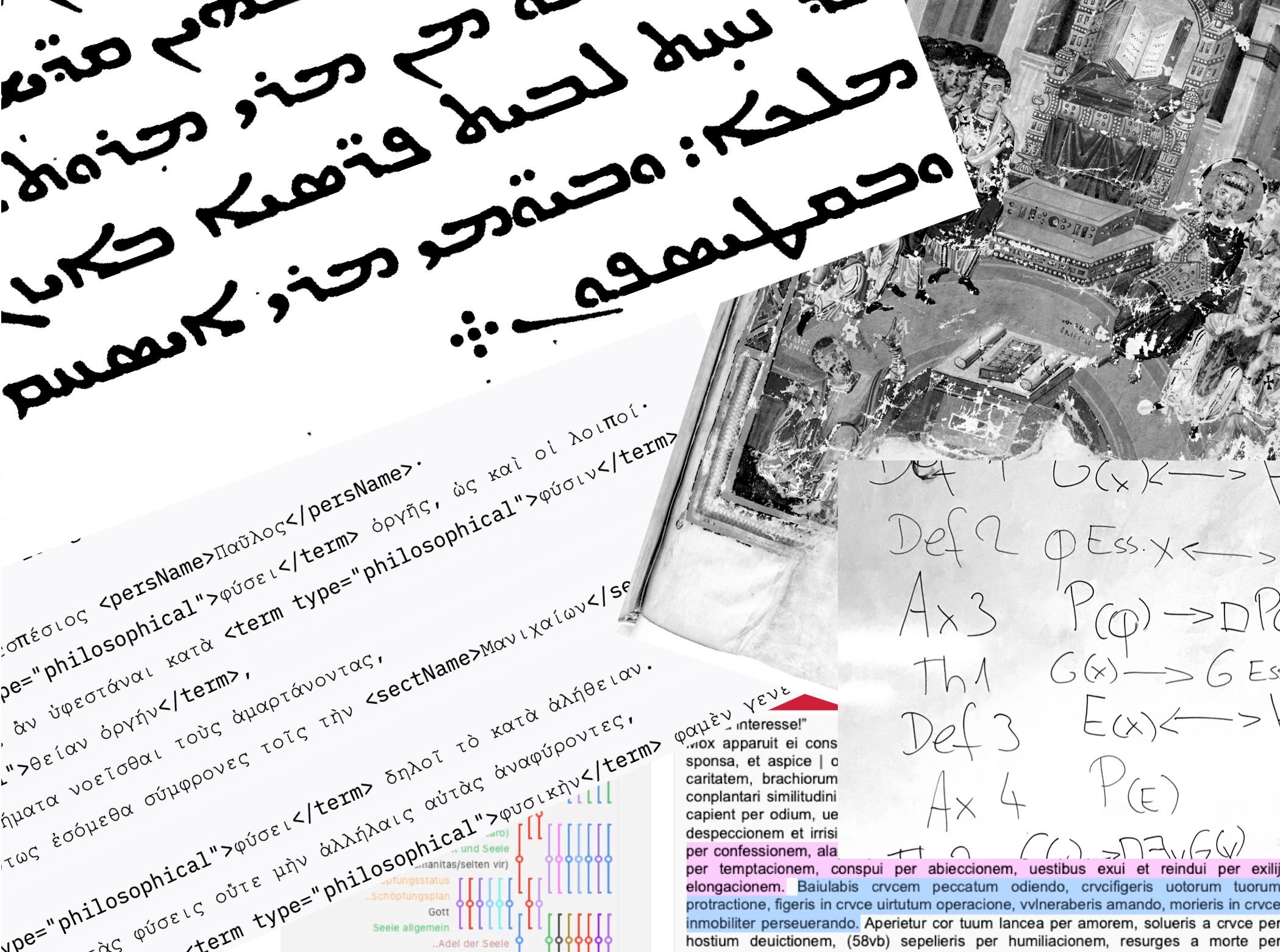
Project HELVABAS – Decoding Helfta
The German–Swiss collaborative project investigates the formation processes of key texts from Helfta using digital methods. Its aim is to trace their biblical and patristic foundations as well as their theological development with respect to the themes of virtue, authority, and anthropology. The focus is on the writings of Mechthild of Magdeburg, Mechthild of Hackeborn, and Gertrud of Helfta, which rank among the most significant works of medieval mysticism. Previous research has oscillated between assumptions of radical originality and assessments of mere transmission of tradition. The project addresses this by integrating patristic and medievalist perspectives and employing digital text analyses (MAXQDA) to make structure, source references, and reception processes visible. In doing so, it opens up a new perspective on both innovation and adherence to tradition in the Helfta texts.
Project Synodicon OrientaleThe aim of this project is the first-ever preparation of a scholarly commentary and a new German translation of the Synodicon Orientale, the collection of synodal acts (410–823 CE) from the Sasanian Empire and the early Islamic period. These studies are intended to provide the foundation for a digital edition of this challenging material, which supplies fundamental data on the history of diverse forms of Christianity in this vast geographical area. Geodata integrated into historical maps, authority records, visualizations, and much more are planned to be made accessible as an Open Science project, also for a broader scholarly and public audience.
The project builds upon the long-term initiative on the acts of the Council of Ephesus (431), funded by the DFG since 2016, and develops new digital approaches for accessing extensive pre-modern source corpora. At its core are the acts of the ecumenical councils up to Nicaea II (787), whose decisions continue to form the doctrinal foundation of most Christian churches. Despite their great significance, these multilingual texts have so far remained difficult to access. By combining translation and commentary with AI-assisted methods, including a specially trained large language model (LLM), the project systematically captures structure, technical terminology, prosopographical and geographical data. For the first time, these sources are made suitable for text mining and are provided in an open, digitally encoded data space in accordance with the FAIR principles. This is complemented by web-based search modules and interactive maps (cf. the aforementioned Synodicon Orientale project), enabling sustainable and versatile use of the material.
Gott q.e.d.The project builds upon courses conducted jointly with the Department of Mathematics (number theory and history of mathematics) at JGU. Its aim is the creation of a textbook featuring newly translated source texts from the shared history of theology and mathematics. The project involves the mathematicians Prof. Dr. Stefan Müller-Stach and Prof. Dr. Tilman Sauer:
Stefan Müller-Stach
Tilman Sauer